Physical Address
304 North Cardinal St.
Dorchester Center, MA 02124
Physical Address
304 North Cardinal St.
Dorchester Center, MA 02124

How a culture of emotional silence is shaping — and quietly breaking — South Asian men.
Personal Essay · 10 min read
This essay draws on personal experience growing up in Gilgit-Baltistan and observations of South Asian communities across cultures and generations. It is written in the spirit of honest conversation, not condemnation — of any individual, community, or tradition.
There was a tragedy in my neighbourhood when I was a child. I grew up in the mountains of northern Pakistan, in Gilgit-Baltistan, where the roads are narrow, the cliffs are steep, and accidents are a grim fact of life. One day, the two sons of our neighbours, their only sons, were travelling from Hunza to Gilgit when their car slipped off the road. Both were killed.
The grief that swept through the community was enormous. But what the entire neighbourhood talked about the next day was not the loss itself. It was the father.
He had not shed a single tear.
People said it with admiration. With awe. Like he had passed some kind of test. Like not breaking down at the death of both his children was something to be celebrated. That memory has stayed with me for years. Because I now understand what it really was. Not strength. It was a lifetime of training in emotional suppression so complete that even the worst possible pain could not break through the wall.
This is what growing up as a desi man looks like from the inside.
From the moment a South Asian boy is old enough to understand language, he begins absorbing a very specific lesson: emotions are weakness. Crying is shameful. Sensitivity is something to be embarrassed about. The word used, directly or indirectly, is always the same. Mard bano. Be a man.
Nobody sits a young boy down and says, “You are not allowed to feel things.” It is subtler than that. It is in the way his father never hugged him. In the way his mother said “don’t cry, you are a boy” when he fell down. In the way male relatives were praised for being hard and silent, while anyone who showed vulnerability was quietly mocked.
By the time a desi boy becomes a desi man, the suppression is no longer even conscious. It has become identity. Being emotionally closed off stops feeling like a behaviour and starts feeling like a personality.
“He didn’t cry at his sons’ funeral, and the whole town called him strong. That one memory tells you everything about what we do to our men.”
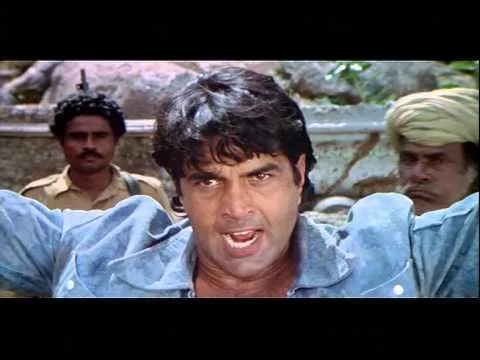
Dilwale Dulhania Le Jayenge (1995): Raj is charming, persistent, and romantic, but emotional vulnerability? Never. His feelings come out as gestures and grand moments, never as honest conversation.
Kuch Kuch Hota Hai (1998): Rahul spends years denying his feelings for Anjali, unable to articulate love until life essentially forces it out of him. Emotional avoidance dressed up as fate.
Kabhi Khushi Kabhie Gham (2001): Yash Raichand, a father who disowns his son, is framed as dignified and principled. His emotional rigidity is presented as honour.
Devdas (2002): A man who cannot regulate or communicate his emotions, so he destroys himself instead. Romanticised as tragic love. Actually a masterclass in anxious-avoidant attachment.
For two decades, these films were the emotional textbooks of an entire generation of desi men. And what did they teach? That real men brood, chase, and sacrifice, but never sit down and talk about how they actually feel.
I want to be honest about something. I am an educated person. I have studied, read widely, and spent years in academic environments. And I did not come across the concept of attachment theory until I was well into adulthood, and even then it was almost by accident.
Attachment theory, for anyone equally unfamiliar: it is the idea, developed by psychologist John Bowlby, that the emotional bonds we form with our early caregivers shape how we connect with people for the rest of our lives. Whether we feel secure in relationships, or anxious, or avoidant, or some chaotic mix of all three, a great deal of it traces back to how safe and seen we felt as children.
This is not obscure science. It is foundational psychology. It is discussed in schools, therapy offices, and mainstream media across much of the world.
But in a desi household? The conversation simply does not happen. There is no space for it. When emotional expression itself is suppressed, the idea of sitting with your feelings long enough to understand where they come from is almost unthinkable.
Most desi men I know, including myself for a long time, operate on autopilot. Something makes you angry, you shout or you go silent. Something makes you sad, you get busy or you disappear. Someone gets too close, you pull back. And you never ask yourself why. You just assume this is normal. This is just how men are.
It is not how men are. It is how men are made.
There is a particular kind of busyness in desi culture that functions as armour. Work, responsibilities, family obligations, social commitments, they fill every hour so completely that there is no time left to be alone with your own thoughts. And for many men, this is not accidental. It is relief.
Because if you stop, if you actually sit quietly and ask yourself how you are doing, what you feel, what you want, why you react the way you do, the answers can be uncomfortable. And nobody taught you what to do with uncomfortable answers. So you keep moving.
Self-reflection is not a value that most desi men are raised with. Introspection is not encouraged. Therapy is stigmatised, seen as something for “mad people” or, worse, for the weak. Journaling, mindfulness, emotional processing, these are things that might be mentioned with a smirk at family dinners.
“If you never learn to look inward, you will spend your whole life reacting to your past, to your wounds, to patterns you cannot even see.”
The result is men who are strangers to themselves. Men who cannot tell you what they genuinely feel in a relationship. Men who would not recognise an attachment wound if it was directly causing them pain, which, in most cases, it silently is.
Here is where the personal becomes deeply structural.
In much of desi culture, men marry young, often before they have done any meaningful inner work, before they understand themselves, before they have sat with their own needs and fears and patterns long enough to bring something honest to a relationship.
And then life begins running on a track. Job. Wife. Children. Obligations. Repeat. There is a rhythm to it that looks, from the outside, like a functioning life. From the inside, for many men, it is closer to sleepwalking. They are present in body but absent in emotional engagement. Ticking boxes. Going through motions.
The real tragedy is what happens in that numbness. Men who have never been taught to sit with intimacy, who have been conditioned to see emotional vulnerability as weakness, who have no vocabulary for their inner life, these men often seek stimulation, validation, or escape the moment an opportunity presents itself. Infidelity in desi marriages is not rare. It is, in fact, extraordinarily common. It is just extraordinarily hidden.
And this is where we must talk about the women.
Because when a desi woman discovers her husband has been unfaithful, she is almost never met with a social structure that supports her in leaving. She is met with pressure, from family, from community, from the weight of what people will say, to stay quiet, to forgive, to protect the marriage at all costs. Her pain is real. Her choices are constrained. And so she stays. She absorbs. She performs normalcy. And she passes that constrained silence on to the next generation.
This is not a criticism of these women. It is an indictment of a system that gives them no better options. But it is also a recognition that emotional avoidance in men has real victims, and they are not just the men themselves.
None of this is destiny. These are patterns. And patterns can be interrupted.
The work begins, first and most urgently, with parents. Specifically, with fathers. A father who hugs his son, who says “I love you” out loud, who admits when he is wrong, who lets his children see him cry — that father is doing something revolutionary in a desi context. He is showing a boy that feelings are not dangerous. That a man can be tender and still stand tall.
Mothers matter enormously too — in refusing to tell boys not to cry, in not rewarding stoicism, in raising sons who are expected to be emotionally literate rather than just academically or professionally successful.
What modern desi parents can start doing today
Name emotions openly at home — yours and your children’s. Let boys cry without commentary. Have conversations about feelings at the dinner table, not just about grades and careers. Model therapy or counselling without shame. Teach boys that listening is strength. Raise daughters who know their pain deserves to be named — and sons who will listen when it is.
But parents alone cannot carry this. The education system has a role too — a significant one. Schools in Pakistan, India, and across the diaspora need to introduce emotional intelligence as a subject that is taken seriously, not as a side note. Children should learn about mental health, about how to express and process difficult feelings, about what healthy relationships look like — long before they are inside one.
And then there is the hardest part: the men themselves. The grown men who were raised in the old way, who married young and went to sleep inside their lives. They are not lost. It is possible to begin this work at any age. Therapy, reading, honest conversations with trusted people — these are not signs of weakness. They are signs that you are paying attention.
“The bravest thing a desi man can do is admit he doesn’t know himself — and decide to start learning.”
The father in my neighbourhood who didn’t cry at his sons’ funeral — I do not judge him. He was a product of everything he was taught. He had no other tools. But I think about the grief that must have lived, voiceless, somewhere inside him. And I think about how many desi men are carrying exactly that — silent, unnamed, untouched — right now.
We can do better. Not by abandoning culture, not by rejecting everything our parents gave us, but by adding something they could not. By learning to feel, and to say so. By raising the next generation with that permission already built in.
The wall that keeps desi men from their own hearts is not made of stone. It is made of habit. And habits, with enough will and enough honesty, can change.
· · ·